Aging-in-Place Renovations in Canada: Real Costs, Right Contractors, and What Subsidies Actually Cover (2026)
April 26, 2026 · 19 min read
A practical guide to renovating a Canadian home for safety, mobility, and long-term independence — including what each project really costs, how to vet a contractor, and which subsidies actually pay you back.
Last updated: April 26, 2026
Why This Guide Exists
Most aging-in-place advice tells you to “talk to a contractor” and stops there. That’s not enough.
The renovations that keep someone safe at home — a stairlift, a walk-in tub, a wheelchair ramp, widened doorways — can swing wildly in cost depending on which contractor you call, whether they’re certified for accessibility work, and whether you’ve claimed the subsidies you’re entitled to. The same curved stairlift can be quoted at $9,000 by a national chain and $14,000 by a local installer two weeks later. The same walk-in tub can be installed under the federal Home Accessibility Tax Credit (15% back) or paid for in cash. The same bathroom retrofit can qualify for a forgivable municipal loan up to $25,000 — or be paid entirely out of pocket if you don’t know the program exists.
This guide is the answer to the question we hear most often from families: “My mom needs the bathroom and stairs done. What does that actually cost, who do I call, and what does the government cover?”
We’ll walk through the most common renovations and what they realistically cost in 2026, how to tell a real accessibility specialist from a general contractor, the federal and provincial subsidies that pay back a meaningful chunk of the bill, and the order to do things in so you don’t waste money fixing the wrong thing first.
If you’re earlier in the process and still pricing out the broader cost of aging at home — PSW hours, public coverage, long-term care thresholds — start with our cost of aging in place in Ontario guide, then come back here for the renovation specifics.
The Big Picture: What Renovations Actually Cost
Here’s what a Canadian family is realistically looking at, depending on the senior’s needs:
| Scenario | Typical Renovation Budget | What It Covers |
|---|---|---|
| Light prep (independent senior, planning ahead) | $2,000 – $6,000 | Grab bars, comfort-height toilet, motion-sensor lighting, smart-home additions |
| Moderate retrofit (some mobility limitations) | $8,000 – $20,000 | Straight stairlift, accessible shower retrofit, ramp, doorway widening |
| High-needs retrofit (significant mobility loss) | $25,000 – $50,000 | Curved stairlift, walk-in tub, full bathroom rebuild, kitchen modifications, ramp |
| Comprehensive aging-in-place rebuild | $50,000 – $150,000+ | Main-floor primary bedroom, full bathroom rebuild, accessible kitchen, ramp, structural reinforcement |
The single most useful benchmark: if a renovation takes you under $36,000 total, you’re financially competitive with a year of long-term care accommodation in most provinces. Most aging-in-place renovations sit comfortably under that line — which is why the math nearly always favours staying home, if you can find good contractors and claim what you’re owed.
Section 1: Start With an Occupational Therapy Assessment
This is the section most families skip. They shouldn’t.
Before you call a single contractor, get an occupational therapist (OT) to walk through the home and produce a written safety assessment. It’s the highest-leverage $300 to $600 you’ll spend in this entire process.
Why it matters:
1. The OT prescribes what’s actually necessary versus optional. A grab bar costs $200 installed. A bathroom rebuild costs $12,000. An OT will tell you which one your situation actually requires — contractors often won’t, because the bigger the job, the bigger the invoice.
2. OT documentation unlocks the Assistive Devices Program (ADP) in Ontario and similar provincial equipment funding programs across Canada. ADP covers 75% of approved equipment costs (wheelchairs, scooters, hearing aids, home oxygen) — but only with an authorized clinical assessment. Without the OT, you pay full price.
3. An OT prevents the most expensive mistake families make: renovating in the wrong order. Many families spend $15,000 on a curved stairlift only to realize six months later that what they actually needed was a main-floor bedroom plan because the senior could no longer transfer safely. The OT catches that day one.
What an OT assessment costs in Canada (2026):
– One-time home safety assessment: $300 – $600
– Hourly rate for follow-up consultations: $63 – $150/hour depending on complexity
– Mobile in-home assessments cost more than in-clinic
Many extended health benefits cover OT assessments. Check before paying out of pocket.
For finding an OT in your area, our provider directory lists vetted Canadian occupational therapists by city.
Section 2: The Most Common Renovations and What They Cost
These are the projects that come up in nearly every aging-in-place renovation, ranked roughly by frequency.
Stairlifts
For multi-storey homes, a stairlift is dramatically cheaper than moving or building a main-floor primary bedroom. The cost depends almost entirely on staircase shape:
| Staircase Type | 2026 Installed Cost | Lead Time |
|---|---|---|
| Straight staircase (no turns) | $2,500 – $4,500 | 1 – 2 weeks |
| Used / refurbished straight stairlift | $2,900+ | 1 – 3 weeks |
| Two straight stairlifts at a landing (transfer mid-staircase) | $4,500 – $9,000 | 2 – 4 weeks |
| Curved or spiral staircase | $9,000 – $16,000+ | 4 – 8 weeks |
The big brands in Canada:
– Acorn — largest market share, aggressive pricing on straight lifts, often advertises through retiree-targeted media
– Bruno — premium build quality, popular with installers who want long warranties
– Stannah — UK heritage brand, strong in custom curved installs
– Harmar — competitive on both straight and outdoor lifts
The pro tip nobody tells you: if your staircase has a landing and the user has the strength and balance to safely transfer between two lifts, two straight lifts cost dramatically less than one continuous curved lift. A curved lift requires a custom-fabricated rail that matches your exact staircase angles — which is why curved lifts cost $9,000+ and take 4-8 weeks. Two straights at a landing typically install in a week and cost meaningfully less than the curved equivalent (see the table above). Have your OT assess transfer safety before defaulting to curved.
Bathroom Retrofits
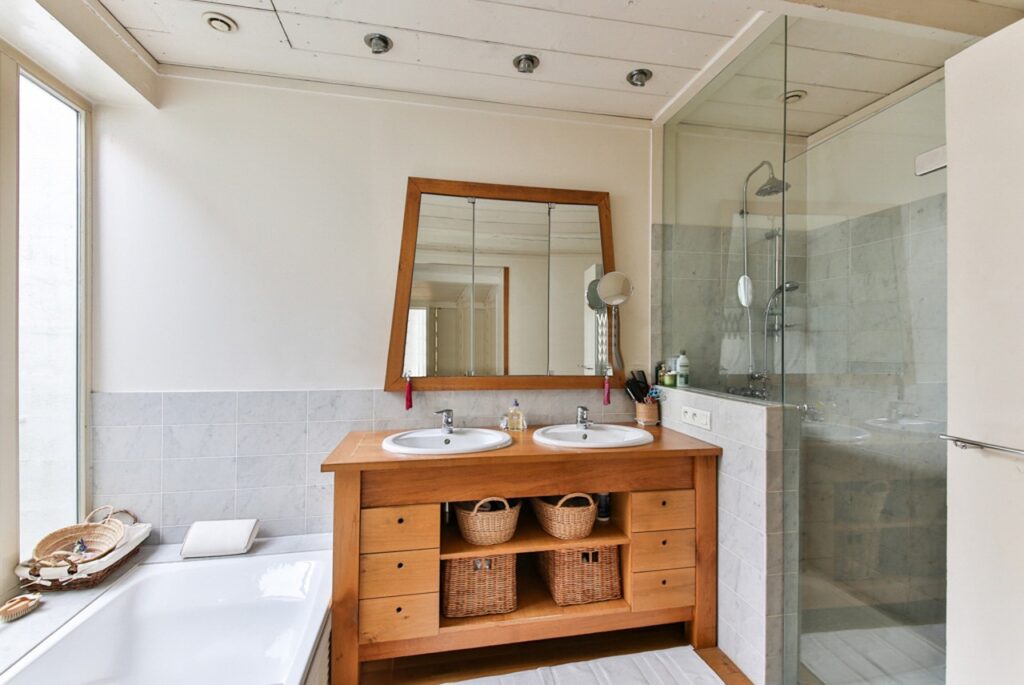
The bathroom is where most serious senior falls happen. The fix is usually a walk-in tub, a barrier-free roll-in shower, or both. Pricing for 2026:
| Bathroom Project | Total Installed Cost |
|---|---|
| Compact walk-in tub | $4,000 – $6,500 |
| Standard walk-in tub | $6,000 – $10,000 |
| Bariatric / oversized walk-in tub | $10,000 – $15,000 |
| Wheelchair-accessible (roll-in) tub | $10,000 – $16,000 |
| Walk-in tub with hydrotherapy | $15,000 – $20,000+ |
| Barrier-free shower retrofit (no tub) | $5,000 – $12,000 |
| Full accessible bathroom rebuild (tub + tile + grab bars + comfort toilet + lighting + non-slip floor) | $15,000 – $35,000 |
The brand chains: Bath Fitter, Bath Depot, and Bath Solutions are aggressive in this market. They’re competent, they install fast, and they warranty their work — but you’ll pay a premium for the brand name. Local independents quoting comparable work often come in 15-30% lower.
Hidden costs to budget for:
– Permits + demolition + disposal of the old tub: $300 – $1,000
– Plumbing or electrical upgrades in pre-1980 homes: $500 – $3,000
– Doorway widening to fit a roll-in installation: $1,000 – $2,500
– Subfloor reinforcement under bariatric tubs: $500 – $2,000
Get three quotes for any bathroom job. Variance is wider here than any other category.
Wheelchair Ramps
| Ramp Type | Installed Cost | Best For |
|---|---|---|
| Modular aluminum (rented) | $200 – $400/month | Temporary post-surgical recovery |
| Modular aluminum (purchased) | $1,500 – $4,000 | Long-term, can be reconfigured or sold later |
| Custom wood ramp | $2,000 – $5,000 | Permanent, blends with home aesthetic |
| Concrete ramp | $4,000 – $10,000 | Permanent, highest durability, snow/ice resistant |
The slope rule: building codes require 1:12 minimum (one inch of rise per twelve inches of run). For a 30-inch height to a typical front door, that’s 30 feet of ramp — which won’t fit on most front yards. This is why many ramps run along the side of the house instead, or split into two segments with a landing.
Doorway Widening
Standard interior doorways are 28-30 inches. A wheelchair needs 32 inches minimum, ideally 36. Widening one doorway costs $1,000 – $2,500 depending on whether the wall is load-bearing and whether you need to reroute electrical or plumbing.
Grab Bars and Small Installations
The high-ROI, low-cost fixes most people put off:
- Professionally installed grab bar: $150 – $400 per bar
- Comfort-height toilet replacement: $400 – $900 installed
- Lever-style door handles (full-house replacement): $400 – $900
- Motion-sensor and night lighting: $300 – $1,500
- Smart-home additions (voice-controlled lights, video doorbell, smart locks): $500 – $2,500
Don’t install grab bars yourself — they need to be anchored into wall studs to actually hold weight in a fall, and DIY mounts come out of drywall under load. Pay the installer.
Section 3: How to Find a Good Contractor
This is the section that determines whether your renovation goes well or badly. There’s a clear hierarchy of who to call:
Tier 1: CAPS-Certified Specialists
The Certified Aging-in-Place Specialist (CAPS) credential is issued by the National Association of Home Builders (NAHB) and is the most reliable signal that a contractor actually knows accessible design standards, building code as it applies to mobility, and how to plan for a senior’s progressive needs over a 10-year horizon. Canadian CAPS-certified contractors aren’t common but they exist in most major cities. Search the NAHB directory or ask your OT — OTs almost always know the local CAPS contractors.
CAPS contractors typically charge a 10-20% premium over a general contractor. That premium is worth it. They know things general contractors don’t:
– Why a 5-foot turning radius matters in a bathroom
– How to plan electrical for future medical equipment (oxygen concentrator, hospital bed)
– How to stage a renovation so the senior can keep living in the home during work
– Which specific brands of grab bar, toilet, and shower bench actually hold up over years
Tier 2: Accessibility-Specialized Contractors
Some local contractors don’t have the CAPS credential but have built their business around accessibility renovations. Look for:
– Portfolio that’s at least 50% accessibility work (not just kitchens with one ramp project mixed in)
– They mention OT assessments naturally in conversation
– They’ve done work in your municipality before (knows local building code, permit process)
– They can name the federal HATC and your provincial equipment program without prompting
Tier 3: Brand Chains (Bath Fitter, Acorn, Bath Depot)
Reliable for what they do, but they only do one thing:
– Bath Fitter / Bath Depot for tub and shower retrofits — competent, fast, warranty-backed, but premium pricing
– Acorn / Bruno / Stannah for stairlifts — same model
– Closet Factory, Home Depot installation services for grab bars and small jobs
Use them for single-trade projects. Don’t use them for whole-bathroom rebuilds or anything structural.
Tier 4: General Contractors
Fine for non-accessibility work, but not your first call for an aging-in-place renovation. They’ll do what you ask, but they won’t catch the things you didn’t think to ask about — like turning radius, transfer space, lighting plan for low vision, or whether the proposed bathroom layout actually works for someone using a walker.
Five Vetting Questions to Ask Any Contractor
Before signing anything:
- “How many accessibility renovations did you complete in the last 12 months?” Look for at least 6-8.
- “Are you CAPS-certified or have your team members done CAPS training?” A “no” doesn’t disqualify Tier 2 contractors but it tells you who you’re working with.
- “Will you work directly with our OT on the design, or do we hand you a finished plan?” Good ones welcome OT collaboration.
- “What’s your warranty on grab bar installation, stairlift rail mounting, and tile work in the bathroom?” Should be at least 2 years on labour for grab bars and tile, longer for stairlifts.
- “Have you applied for Ontario Renovates or comparable municipal grants on behalf of clients before?” A yes means they understand the paperwork. Saves you weeks of back-and-forth.
Red Flags
- Pressure to sign that day or “lock in” pricing
- Refuses to give a written quote
- Quote dramatically lower than two others (someone is cutting corners)
- No proof of liability insurance and WSIB coverage
- Wants 50%+ payment up front — standard is 25-30% at signing, balance on completion
- No specific mention of how the project will be staged if the senior is living there during work
Section 4: Subsidies and Tax Credits That Pay You Back
This is where families leave the most money on the table. Three layers of support stack: federal credits, provincial equipment programs, and municipal renovation grants.
Federal: Home Accessibility Tax Credit (HATC)
- Reimbursement rate: 15% of qualifying renovation expenses
- Annual cap: $20,000 of expenses → up to $3,000 back per year
- Eligibility: Anyone 65+ at year-end OR anyone eligible for the Disability Tax Credit at any age. A supporting family member can also claim renovations to their own home if the eligible senior lives there or could reasonably live there. Renovations to a senior’s separate home don’t qualify under the supporting family member’s HATC — the senior claims those on their own return.
- Eligible projects: Ramps, walk-in tubs, accessible showers, grab bars, stairlifts, doorway widening, lever handles, lowered counters, non-slip flooring
Important 2026 change: Through the 2025 tax year, you could claim the same expense under both HATC and the Medical Expense Tax Credit (METC). Starting with the 2026 tax year, you must choose one or the other for any given dollar of expense. For most accessibility renovations, the HATC’s 15% on $20,000 produces a larger credit than METC. For very high medical expenses, METC may win. Run both calculations or have your accountant do it.
Federal: Medical Expense Tax Credit (METC)
The METC covers a broader list of medical expenses, including some renovations specifically prescribed by a medical professional:
– Ramps, lifts, hand controls, widened doorways — eligible if prescribed for a person with a severe and prolonged mobility impairment
– Walk-in tubs and accessible showers — eligible if prescribed for medical reasons (very common with arthritis, post-stroke recovery, dementia falls)
– Hospital beds, oxygen equipment, custom orthotics
Claim METC on Line 33099 of your federal return. The threshold: only the portion of medical expenses exceeding 3% of net income (or $2,890 in 2026, whichever is less) is creditable.
Provincial: Equipment Programs (separate from renovations)
Each province runs an assistive devices program that covers equipment, not structural renovations:
- Ontario — Assistive Devices Program (ADP): Covers 75% of approved equipment cost (wheelchairs, scooters, rollators, hearing aids, home oxygen). 100% for ODSP / Ontario Works recipients. No income test for the standard 75%. Requires authorizer assessment (OT or PT prescribes).
- Alberta — Alberta Aids to Daily Living (AADL): 75% standard coverage on wheelchairs, mobility aids, oxygen.
- Quebec — RAMQ orthopedic devices program: Covers wheelchairs, prostheses, mobility aids; reimburses through RAMQ.
- Manitoba — Home Care equipment loans: Free loan of basic equipment (commodes, walkers, hospital beds, raised toilet seats) through the Manitoba Home Care Program and Canadian Red Cross HELP loan program.
- British Columbia — Health Authority equipment loans: Equipment loans available through regional Health Authorities, primarily for clients receiving public home care.
Critical distinction: these programs cover equipment (things you can wheel away), not structural renovations (things attached to the house). For renovations, you stack HATC + METC + your provincial/municipal renovation program.
Provincial / Municipal: Renovation Programs
This is the layer most families have never heard of, and the one that can save you the most money. Every province has at least one program for accessibility renovations, though the structure varies dramatically.
Ontario — Ontario Renovates (administered municipally)
Ontario Renovates provides forgivable loans for accessibility renovations through individual municipalities or counties. The defining feature: if you keep the home as your principal residence for 10 years, the loan is fully forgiven — it becomes a grant. Funding caps and rules vary widely by where you live:
| Municipality | Maximum Funding | Notable |
|---|---|---|
| City of London (2025) | $25,000 | First $5,000 for accessibility issued as outright grant (no loan), no mortgage registration on amounts above $5,000 |
| Region of Waterloo | $25,000 | Property assessed value cap of $505,469 |
| County of Simcoe | $15,000 | Income cap $91,000 gross, liquid assets <$20,000 |
| District of Muskoka | Varies | Income threshold $115,100, more generous on liquid assets |
| County of Wellington (Guelph area) | $5,000 | Smaller program, currently closed for new applications as of April 2026 — check status before applying |
The takeaway: Ontario Renovates is highly variable. A senior in London or Waterloo Region can get up to $25,000; a senior in Wellington County is capped at $5,000 and may have to wait for the next funding cycle. Search “[your municipality] Ontario Renovates” or call your municipal housing department.
Quebec — Programme d’adaptation de domicile (PAD)
Quebec’s PAD program is the most generous in Canada by absolute dollar amount. Administered by the Société d’habitation du Québec, the program funds physical adaptations for people with permanent functional limitations:
- Standard maximum: up to $16,000 per eligible person for typical adaptations (ramps, bathroom retrofits, stairlifts, doorway widening)
- Plus an additional up to $7,000 in specific complex cases
- Total maximum exposure: up to $50,000 per eligible person for the most complex situations involving major structural work
- Budget allocation: $30 million for the 2026-2027 fiscal year
- Eligibility: requires a functional assessment by an OT confirming permanent limitation
- Two delivery options: Option 1 (professional accompaniment) — the program manages contractor selection. Option 2 (self-determined) — the homeowner manages everything and submits invoices.
For Quebec residents, this is dramatically more generous than the Ontario or Manitoba equivalents. Apply through your municipal partner (most cities, including Quebec City and Montreal, partner with the Société d’habitation du Québec).
British Columbia — BC Rebate for Accessible Home Adaptations (BC RAHA)
Formerly known as Home Adaptations for Independence (HAFI), the program was relaunched as BC RAHA. Administered by BC Housing:
- Maximum lifetime rebate: $20,000 per household (combined with any prior HAFI funding received after April 2019)
- Eligibility: BC resident with limited income and assets; you or someone in your household must have a permanent disability or loss of ability
- Process: First-come, first-served; once approved you have 180 days to complete the work
- Eligible projects: Ramps, lifts, stairlifts, bathroom retrofits, lowered counters, accessible doorways
Apply through bchousing.org/BC-RAHA. Don’t use older HAFI application forms — they’re no longer accepted.
Manitoba — Safe and Healthy Home for Seniors Program (SHHS)
Administered by March of Dimes Canada on behalf of the Manitoba government:
- Maximum per grant: $5,000 (urban) or $6,500 (rural/remote)
- Lifetime maximum: $15,000 (apply for new grants every 3 years)
- Eligibility: Age 65+, household income $60,000 or less, Manitoba resident
- Eligible projects: Ramps, widened doorways, curbless showers, improved lighting, grab bars
- Apply: marchofdimes.ca or call 1-866-906-6006
Alberta — Residential Access Modification Program (RAMP)
Administered through the Alberta Ministry of Seniors, Community and Social Services:
- Funding: Up to $7,500 in any 12-month period; lifetime maximum of $15,000 across multiple applications
- Eligibility: Albertans with permanent mobility impairments; income-tested, with caps that vary by household size
- Eligible projects: Ramps, lifts, bathroom retrofits, doorway widening
- Authorizer required: OT assessment must accompany the application
Confirm current funding caps and income thresholds with Alberta Health Services before applying — RAMP rules have shifted in recent budgets.
The Realistic Stack — What This Looks Like in Practice
For an Ontario family in a municipality with a strong Ontario Renovates program (like London or Waterloo Region), a $20,000 bathroom retrofit can stack down to roughly $4,000–$6,000 actual out-of-pocket after the municipal forgivable loan + federal HATC + METC. That’s a 70-80% reduction.
For a Quebec family, the same $20,000 retrofit can be almost entirely covered by PAD if they qualify, leaving only the federal HATC top-up.
For a Manitoba family, the SHHS grant covers up to $5,000, leaving the family to fund the remainder with federal credits and savings.
The wider point: where you live changes the math by tens of thousands of dollars. Always check your provincial and municipal programs before booking work — and apply BEFORE the contractor starts, since most programs require pre-approval.
Section 5: A Realistic Renovation Sequence
Done right, an aging-in-place renovation runs in this order:
Step 1 (Week 1-2): OT home assessment. $300-$600. Produces a written report identifying what’s actually necessary versus optional. Save this — you’ll need it for ADP applications, contractor briefings, and to claim METC if any expense is medically prescribed.
Step 2 (Week 2-4): Identify funding. Apply for any municipal Ontario Renovates / HAFI / RAMP equivalent BEFORE booking work. Most programs require pre-approval; you can’t apply retroactively for work already done. Confirm HATC eligibility with an accountant.
Step 3 (Week 3-6): Get three contractor quotes. For each project type (bathroom, stairlift, ramp), get three written quotes. Use the five vetting questions above. Variance can hit 30-40% — three quotes catches that.
Step 4 (Week 4-8): Stage the renovations. Do safety-critical work first. Bathroom typically goes first (highest fall risk). Stairlift second. Ramp third. Cosmetic accessibility (lever handles, lighting) last — they don’t gate independence.
Step 5 (Week 8-12): Final inspection. Have your OT walk through the completed work. They’ll catch things contractors missed (light placement, towel bar height, threshold transitions).
Step 6 (Tax filing, January-April): Claim. HATC on Line 31285. METC on Line 33099. Provincial credits on the appropriate provincial form.
A Worked Example: The $20,000 Bathroom Retrofit
Linda is 78, lives alone in a London, Ontario bungalow, and had a near-miss fall in the shower last winter. Her daughter Karen calls to coordinate:
| Item | Cost |
|---|---|
| OT home assessment | $475 |
| Walk-in tub installation (mid-tier) | $8,500 |
| Barrier-free shower converted from second bathroom | $7,200 |
| Comfort-height toilet replacement (×2 bathrooms) | $1,400 |
| Grab bars (5 total, professionally installed) | $1,500 |
| Lever handles throughout | $650 |
| Bathroom motion-sensor lighting | $475 |
| Subtotal | $20,200 |
The stacking:
– City of London Ontario Renovates funding (Linda qualifies on income): $25,000 maximum, of which the first $5,000 is an outright grant for accessibility, balance as a forgivable loan over 10 years. Linda uses $20,200 of it — $5,000 grant + $15,200 forgivable loan.
– Federal HATC (15% on $20,000 cap): $3,000 back at tax filing
– METC on prescribed walk-in tub component (after 3% income threshold): roughly $300 (Linda chooses HATC over METC for the bathroom expenses since 2026 stacking rules now require choosing one)
Linda’s actual immediate out-of-pocket: $0 (the London Renovates funding pays the contractors directly, plus she gets ~$3,000 back the following spring at tax time).
Linda’s net cost over 10 years (assuming she stays in the home): approximately -$3,000 — meaning the federal tax credit means the renovation effectively pays her a small amount over the long run.
This is what aging-in-place renovations look like when you stack the available support correctly. For comparison: a Wellington County resident (where Ontario Renovates caps at $5,000 and is currently closed for new applications) would face a very different math — roughly $14,000 out-of-pocket on the same $20,200 renovation. Where you live changes everything. Most families don’t apply for any of these programs and pay the full $20,000.
Frequently Asked Questions
Do I really need an OT assessment, or can I skip it?
Don’t skip it. Beyond the safety reasons, most provincial equipment programs (ADP, AADL, HAFI) require OT or PT documentation. Without that paperwork, you don’t qualify for the 75% equipment subsidy — which on a $4,000 wheelchair is $3,000 of free money you walked away from.
How do I find a CAPS-certified contractor in my city?
Search the NAHB directory at nahb.org. Cross-reference with your OT’s recommendations. In smaller Canadian cities, CAPS-certified contractors are rare — in those cases, prioritize Tier 2 accessibility-focused contractors with a strong portfolio.
Can I do these renovations in stages, or do they all need to happen at once?
Stages work fine for most projects. Bathroom and stairlift can be sequenced independently. The exception: if you’re applying for an Ontario Renovates forgivable loan, the program typically requires the funded scope to be completed within a defined window (usually 6-12 months from approval).
How long should an aging-in-place renovation last before it needs redoing?
Quality work should last 15-20+ years with normal wear. Stairlifts have moving parts and benefit from annual servicing — plan ~$200/year for that. Walk-in tubs and roll-in showers should hold up indefinitely if installed correctly. Grab bars never need replacement if installed into studs.
What if my parent refuses to do the renovations?
This is the single most common challenge in aging-in-place planning. The OT’s clinical voice helps — having a healthcare professional explain fall-risk math is often more effective than family members doing it. If decision-making capacity is itself in question, our Ontario capacity assessment guide covers what that process looks like.
Are these renovations tax-deductible if I’m renovating my home for my parent who lives elsewhere?
The HATC allows a supporting family member to claim renovations to their own home if a qualifying senior (their parent, in-law, etc.) lives with them or could reasonably live with them. Renovations to your parent’s separate home don’t qualify under your HATC, but your parent claims them on their own return.
My city isn’t Guelph or Toronto — does this guide still apply?
Yes — the federal HATC and METC are universal across Canada, contractor pricing varies by region but follows the same patterns, and most provinces have an equivalent provincial equipment program plus municipal renovation grants. The specifics differ by province; the framework is the same.
Where to Start
If your parent’s situation has you reading this guide, the highest-leverage first step is an occupational therapy home safety assessment ($300-$600). It tells you what modifications are actually necessary, what equipment qualifies for ADP funding, and which projects to do in what order.
Browse our directory of vetted Canadian home modification specialists to start gathering quotes — or our occupational therapy directory to find a local OT for the assessment first.
City-specific pricing and contractor guides are available for Toronto, Ottawa, Hamilton, and Mississauga. For the broader picture on what aging in place costs once renovations are done — PSW hours, public coverage, long-term care thresholds — see our Ontario cost of aging in place guide.
Methodology and Sources
This guide synthesizes 2026 contractor pricing data from cross-referenced sources including NAHB, Acorn Stairlifts Canada, Bruno, Stannah, Bath Fitter, Bath Depot, RenovationFind, HomeStars, Statistics Canada, the Canada Mortgage and Housing Corporation, the Ontario Ministry of Health (Assistive Devices Program), Société d’habitation du Québec (Programme d’adaptation de domicile), BC Housing (BC Rebate for Accessible Home Adaptations), March of Dimes Canada (Manitoba Safe and Healthy Home for Seniors Program), Alberta Health Services (Residential Access Modification Program), municipal housing services across Ontario (Ontario Renovates implementations in London, Waterloo Region, Simcoe County, Muskoka, and Wellington County), the Canada Revenue Agency (Home Accessibility Tax Credit and Medical Expense Tax Credit), and the National Institute on Ageing.
Cost figures reflect rates published or reported between October 2025 and March 2026. Pricing varies by region within Canada, contractor selection, and project scope. This guide is informational and does not constitute financial, legal, medical, or construction advice. Consult qualified professionals for decisions specific to your situation.