Low-Income Senior Apartments in Ontario 2026: Rent Under $1,000, RGI and How to Apply
March 10, 2026 · updated October 31, 2026 · 9 min read
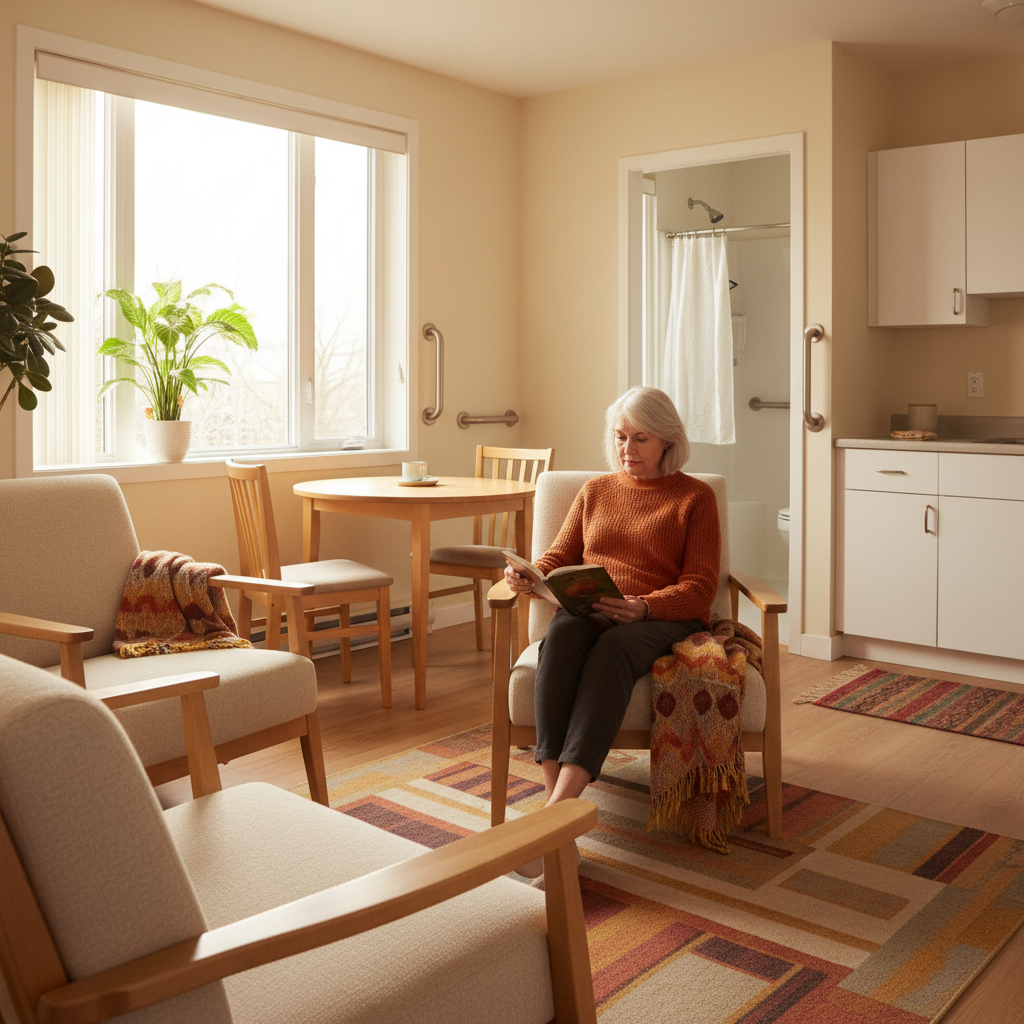
Your mother’s rent just went up again, and her whole income is OAS and GIS. You’ve searched for senior apartments under $1,000 and found listings that look too good, or buildings with no vacancies. Here is how low-income senior housing in Ontario actually works, what it costs, and where to apply first, because the clock only starts when the application is in.
The short answer: In Ontario’s rent-geared-to-income (RGI) housing, a senior pays about 30 percent of their net income in rent. A single senior living on OAS and GIS alone pays roughly $570 a month, and anyone with a net income under $40,000 pays less than $1,000. You apply through your city or region’s central waiting list, such as MyAccesstoHousingTO in Toronto, and the wait is measured in years. While you wait, the Ontario Trillium Benefit pays seniors up to $1,866 a year toward rent and sales tax.
Every figure below comes from ontario.ca, canada.ca or the city and regional housing offices named, checked on October 31, 2026.
What low-income senior apartments cost in Ontario
Ontario’s main affordable option is rent-geared-to-income housing. The rent is tied to income, not to the market. It is normally about 30 percent of monthly adjusted family net income, which is the net income on line 23600 of the most recent tax return. A few utilities and services can move it slightly up or down.
Here is what that means in practice, before any utility adjustment:
- $20,000 net income: about $500 a month
- A single senior on full OAS and GIS only (about $22,800 a year): about $570 a month
- $30,000 net income: about $750 a month
- $40,000 net income: about $1,000 a month
So when people search for senior apartments for rent under $1,000 in Ontario, RGI housing is usually the answer. The catch is not the price. It is the wait.
Who qualifies
- Income: household income must be under the local Household Income Limit, which each city or region sets by unit size.
- Assets: since July 1, 2024, every service manager also applies an asset limit. Check your area’s figure when you apply.
- Status: at least one household member must be a Canadian citizen, permanent resident or refugee claimant.
- Age: anyone 16 or older can apply for RGI housing in general. Seniors’ buildings set their own minimum age.
The waiting list in 2026
Here’s the part nobody wants to hear: the lists are long. As of the second quarter of 2026, Toronto’s centralized waiting list held 105,536 active applications, and 30,048 of them were from seniors. In all of 2025 the city housed 2,838 households from that list, and 1,489 in the first half of 2026.
Toronto does not publish an average wait, but the arithmetic speaks for itself. With about 3,000 households housed a year against more than 100,000 applications, a senior who applies in 2026 should plan for years, not months. Peel Region says only that wait times are significant and differ between Mississauga, Brampton and Caledon. Smaller and northern communities often move much faster.
That is why the first step is always the same: apply now, even if your parent hopes not to need it. Most lists are ordered by application date.
Where to apply in Toronto, Mississauga and Ottawa
Each city or region runs one central application that covers every RGI building in its area, including seniors’ buildings.
Toronto
Apply or update an existing file on MyAccesstoHousingTO, the City of Toronto’s online system. For help, call 311. Toronto tells applicants to treat RGI as a long-term plan, not an answer to an urgent housing need.
Mississauga and Peel Region
Peel Region runs the centralized wait list for Mississauga, Brampton and Caledon. Apply online through a Peel Region account. If your parent is already on the list and something changes, call Housing Client Services at 905-453-1300. Peel notes that choosing more than one city can shorten the wait, because each city’s list moves at its own pace.
Ottawa
The Social Housing Registry of Ottawa keeps the single waiting list for all social housing in the city. Call 613-526-2088 to apply or ask about a file.
Everywhere else in Ontario
Search for your city or region’s “social housing” or “access to housing” office, or call 211 and ask which office keeps the list where your parent lives. You can be on more than one list at once.
How to get housed sooner
There is no way to skip the line, but these steps make a real difference:
- Select as many buildings as you can live with. Every building you rule out is an offer you won’t get.
- Ask for the seniors’ buildings by name. Their lists can move faster than family housing.
- Apply in more than one area if your parent could move. Smaller cities often move faster than Toronto or Ottawa, so ask each office for its estimate.
- Ask about special or local priority. Survivors of abuse have provincial priority, and some regions add local priorities, such as Peel’s medical priority for applicants with less than two years to live.
- Update the file every year. If the office can’t reach your parent when a unit comes up, the offer moves on and the file can be closed.
Other low-income senior apartments to look at
RGI is not the only door. While you wait on the central list, look at these too:
- Non-profit seniors’ buildings run by faith groups, cultural associations and community agencies. Many keep their own waiting list on top of the central one, so call each building directly.
- Housing co-ops. Some co-ops have seniors’ units and a few subsidized units. The Co-operative Housing Federation of Toronto and CHF Canada list co-ops by area.
- Below-market rentals. Some non-profit and new affordable buildings rent at a set discount below market rather than by income. They help when income is modest but not low enough for a quick RGI offer.
- A portable housing benefit. Some service managers pay part of a private-market rent while you wait. Ask about it when you apply.
One warning: you will see listings on Kijiji or Facebook promising a “subsidized seniors apartment.” Real RGI units are never advertised there. They are offered from the official waiting list. Anyone asking for a deposit to hold a subsidized unit is running a scam.
If your parent needs care as well as housing
An affordable apartment isn’t enough if your parent can no longer manage alone. There is no provincial program that pays retirement home rent, so families usually choose between three routes:
- Home care in their current apartment, arranged through Ontario Health atHome at 310-2222. Our guide to home care costs in Ontario shows what public care covers and what private hours cost.
- Supportive housing, where some buildings come with personal support and homemaking on site. Ask Ontario Health atHome which buildings near your parent offer this.
- Long-term care, when they need help around the clock. The basic room rate is set by the province, and a rate reduction exists for low incomes. See our guides to the long-term care waitlist and long-term care costs in Ontario.
A private retirement home is the other option, but it costs far more than RGI rent. Our retirement home cost guide has the real numbers.
Money that helps with rent while you wait
Most families will wait years for a unit. These payments help with today’s rent:
Ontario Trillium Benefit
For July 2026 to June 2027, the Ontario Energy and Property Tax Credit pays seniors 64 and older up to $1,488, and the Ontario Sales Tax Credit adds up to $378 a person. Together that is up to $1,866 a year, paid monthly as the Trillium Benefit. Renters claim it by entering their rent on the ON-BEN form with the tax return, so make sure the rent is actually on it.
GIS and GAINS
If your parent receives OAS, check that they also get the Guaranteed Income Supplement. Ontario then adds GAINS, up to $92 a month, automatically. Together, a single senior with no other income receives about $1,993 a month. Our GIS guide explains how to check, and our guide to government benefits for Ontario seniors covers every program.
Senior Homeowners’ Property Tax Grant
For a parent who still owns their home, the grant pays up to $500 a year. The full amount goes to singles with adjusted family net income of $35,000 or less and couples at $45,000 or less. It shrinks above that and ends at $50,000 for singles and $60,000 for couples. Claim it on the ON-BEN form.
Help to stay in an owned home
If staying put is possible, adapting the home can be cheaper than moving. Many service managers deliver Ontario Renovates, which offers forgivable loans to low-income homeowners for repairs and accessibility work, and the federal Home Accessibility Tax Credit returns 14 percent of up to $20,000. Our aging-in-place renovation guide shows typical costs.
Rent banks
Many Ontario cities run rent banks that give a grant or loan to tenants who have fallen behind on rent. Call 211 to find the one where your parent lives.
Your first four steps
- Gather the paperwork: the latest Notice of Assessment, ID, and proof of status for everyone in the household.
- Apply to the central waiting list in your parent’s area this week, and choose as many buildings as possible, including the seniors’ buildings.
- Check the money: GIS, GAINS and the Trillium Benefit. A free tax clinic can review it; call 211 to find one.
- Call 310-2222 if your parent also needs care, so home care starts while the housing search goes on.
Frequently asked questions
How much is rent in low-income senior housing in Ontario?
In rent-geared-to-income housing it is normally about 30 percent of monthly net income. A single senior on OAS and GIS alone pays about $570 a month, and anyone with a net income under $40,000 pays less than $1,000.
How do I apply for subsidized senior housing in Ontario?
Apply to the central waiting list run by your city or region: MyAccesstoHousingTO in Toronto, Peel Region for Mississauga and Brampton, and the Social Housing Registry in Ottawa. Elsewhere, call 211 to find your local office.
How long is the wait for senior housing in Ontario?
In large cities it is years. Toronto’s list held 105,536 active applications in mid-2026, including 30,048 from seniors, and the city housed 2,838 households in 2025. Smaller and northern communities usually move faster.
Can I find senior apartments under $1,000 in Ontario?
Yes, mainly through rent-geared-to-income housing, where rent stays under $1,000 for anyone with a net income below about $40,000. Non-profit seniors’ buildings and co-ops are worth calling too. Private listings promising subsidized rent for a deposit are a scam.
Does owning a home stop my parent from getting RGI housing?
It can. Ontario has applied asset limits on RGI waiting lists since July 2024, and each area sets its own. Ask the local office how it treats a home your parent is selling.
Find senior services in Ontario
Browse home care, home modification contractors and other aging-in-place services near your parent:
Comparing provinces, or helping a parent who might move? Our affordable senior housing in Canada guide compares every province’s programs side by side.
Sources
RGI rent basis: Region of Durham and City of Ottawa housing directives under O. Reg. 316/19. Toronto waiting list figures: City of Toronto social housing waiting list report, Q2 2026. Toronto application: toronto.ca. Peel application, priorities and asset limits: peelregion.ca. Ottawa registry: ottawa.ca. Ontario Energy and Property Tax Credit, Ontario Sales Tax Credit and ON-BEN: canada.ca, 2026 benefit year. Senior Homeowners’ Property Tax Grant and GAINS: ontario.ca. OAS and GIS: canada.ca, October to December 2026. All checked October 31, 2026.
The RGI Application Checklist
Every document you need, where to apply in your city, and the 3 mistakes that can knock you off the waitlist after years of waiting.
AgePlaceHub is operated by Elvona Inc., Ontario, Canada · [email protected] · We only email what you ask for.