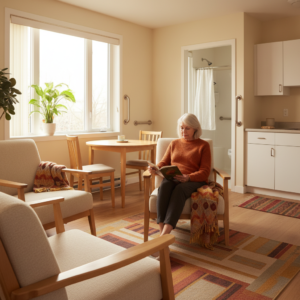

Finding the right retirement home in Toronto can feel overwhelming. With hundreds of residences spread across the city, families face a maze of options, price ranges, and care levels. Whether you are planning ahead for yourself or helping a loved one make the transition, understanding what is available — and what it costs — is the first step toward a confident decision.
Toronto is home to one of the largest and most diverse senior living markets in Canada. From boutique residences in midtown to larger communities in Scarborough and North York, there is something for nearly every budget, lifestyle, and level of care. This guide walks you through everything you need to know about retirement homes in Toronto, including types of care, costs, top neighbourhoods, the waitlist process, and financial assistance programs that can help.
Types of Retirement Homes in Toronto
Not all retirement homes offer the same level of service. In Ontario, the term “retirement home” is regulated under the Retirement Homes Act and covers a range of living arrangements. Understanding the differences will help you narrow your search.
Independent Living
Independent living communities are designed for seniors who are active and self-sufficient but want to leave behind the responsibilities of home maintenance. Residents typically get a private suite, access to common dining, social programming, housekeeping, and on-site staff. Medical care is usually not included but can be arranged privately or through community services.
Assisted Living
Assisted living in Toronto is ideal for seniors who need daily help with tasks such as bathing, dressing, medication management, or mobility. Staff are available around the clock, and care plans are tailored to each resident. Many retirement homes in Toronto offer assisted living alongside independent living, allowing residents to transition seamlessly as their needs change.
Memory Care
Memory care units are specialized environments for seniors living with Alzheimer’s disease, dementia, or other cognitive conditions. These units feature secured entrances, structured daily routines, and staff trained specifically in dementia care. Memory care is typically the most expensive tier of retirement living due to the higher staffing ratios and specialized programming required.
Luxury Retirement Residences
Toronto’s luxury retirement market has grown significantly in recent years. These residences offer resort-style amenities — fine dining, spa services, fitness centres, rooftop terraces, and concierge services. Suites are larger and often fully renovated, and the locations tend to be in desirable urban neighbourhoods. Monthly fees reflect the premium experience and can exceed $8,000 per month.
How Much Do Retirement Homes in Toronto Cost?
Cost is often the first question families ask, and the answer varies widely depending on the type of care, suite size, location, and amenities. Here is a general breakdown of what to expect for retirement homes in Toronto in 2026:
- Independent living: $3,000 to $5,000 per month for a standard studio or one-bedroom suite, including meals, housekeeping, and activities.
- Assisted living: $4,500 to $6,500 per month, depending on the level of personal care required. Some homes charge a base rate plus a care fee that increases with need.
- Memory care: $5,500 to $8,000 or more per month. The higher cost reflects the intensive supervision and programming involved.
- Luxury residences: $6,500 to $10,000+ per month. Premium locations in midtown or the waterfront command the highest rates.
It is important to ask each residence exactly what is included in the monthly fee. Some homes bundle everything — meals, laundry, cable, transportation — while others charge separately for extras. Always request a written breakdown before signing a tenancy agreement.
Subsidized Options
Unlike long-term care homes, retirement homes in Ontario are privately operated and not directly subsidized by the government. However, some municipal and provincial programs can offset costs. We cover those in detail in the financial assistance section below. For seniors with limited income, a long-term care home — which is publicly funded and has government-set rates — may be a more affordable alternative, though waitlists are significantly longer.
Best Neighbourhoods for Senior Living in Toronto
Location matters. Proximity to family, medical facilities, parks, and cultural amenities all play a role in quality of life. Here are some of the most popular areas for senior living in Toronto.
North York
North York offers a strong concentration of retirement homes, particularly along Yonge Street and in the Bayview and Bathurst corridors. The area is well-served by public transit, has excellent hospitals like Sunnybrook and North York General, and offers a mix of suburban calm and urban convenience. Many of Toronto’s most established retirement communities are located here.
Scarborough
Scarborough provides more affordable options compared to central Toronto while still offering good access to healthcare, shopping, and green space. The Scarborough Bluffs area is particularly attractive for seniors who enjoy nature. Several mid-range and culturally diverse retirement homes serve the community, reflecting the neighbourhood’s rich multicultural character.
Etobicoke
Etobicoke, especially the areas around Kingsway, Islington Village, and the Lakeshore, is home to several well-regarded retirement residences. The neighbourhood offers a quieter pace of life with easy access to the Humber River trails, Sherway Gardens, and Trillium Health Partners hospital. It is a popular choice for seniors moving from the western suburbs of the GTA.
Midtown Toronto
For seniors who want to stay in the heart of the city, midtown neighbourhoods like Davisville, Yonge and Eglinton, Forest Hill, and Lawrence Park offer upscale retirement living close to restaurants, galleries, theatres, and transit. Expect higher prices, but also walkable streets and a vibrant community atmosphere.
Don Mills
Don Mills and the surrounding Flemingdon and Thorncliffe Park areas offer a balance of green space and accessibility. The neighbourhood is close to the Ontario Science Centre, the Don Valley trail system, and the Shops at Don Mills. Several retirement homes here provide solid mid-range options with good access to the DVP and public transit.
How to Choose a Retirement Home in Toronto
With so many options, it helps to have a structured approach. Use this practical checklist when evaluating retirement homes in Toronto:
- Visit in person. Tour the residence at different times of day. Observe how staff interact with residents. Eat a meal there if possible.
- Ask about staffing. What is the staff-to-resident ratio? Are personal support workers available 24 hours a day? Is there a registered nurse on-site?
- Review the care plan process. How are care needs assessed? How often are plans updated? What happens if needs increase significantly?
- Understand the costs. Get a full written breakdown of the monthly fee, any additional charges, and the policy on rate increases.
- Check the inspection record. The Retirement Homes Regulatory Authority (RHRA) conducts inspections and publishes results online. Review the home’s compliance history before making a decision.
- Talk to current residents and families. Ask about their experience, the food quality, activity programming, and responsiveness of management.
- Review the tenancy agreement carefully. Understand the notice period for moving out, rules around absences (such as hospital stays), and any non-refundable fees.
- Consider future needs. Can the home accommodate increasing care needs, or would your loved one need to move again if their health declines?
What to Expect During Your First Month in a Toronto Retirement Home
Moving into a retirement home is one of the biggest life transitions a person can make. Whether you are the one moving in or you are helping a parent settle, knowing what to expect during the first 30 days can ease anxiety and set realistic expectations.
The Adjustment Period Is Normal
Nearly every new resident experiences some degree of homesickness, confusion, or frustration in the first few weeks. This is completely normal. After decades of living independently, adjusting to a new routine, new faces, and a smaller living space takes time.
Common feelings during the first month include:
- Grief over lost independence — even when the move was voluntary, it can feel like a loss
- Disorientation — learning where things are, remembering staff names, and adapting to meal schedules
- Loneliness — social connections take time to build, especially for introverted residents
- Relief — many residents also feel a weight lift once daily tasks like cooking and home maintenance are handled
If you are a family member feeling conflicted about the decision, you are not alone. Read our guide on coping with the guilt of placing a parent in care — it addresses the emotional side that few people talk about openly.
Tips for Making the Transition Smoother
Families and residents who plan ahead tend to adjust faster. Here are practical strategies that work:
- Personalize the room early. Bring familiar items — a favourite blanket, family photos, a bedside lamp from home. These small touches make a new space feel less institutional.
- Visit frequently but not constantly. Daily visits in the first week help, but gradually spacing them out encourages your loved one to engage with other residents and staff.
- Attend a meal together. Joining your parent for lunch or dinner during the first week introduces them to tablemates in a low-pressure way.
- Ask about welcome programs. Many Toronto retirement homes assign a “buddy” — a current resident who shows the newcomer around and makes introductions.
- Keep a consistent routine. If your parent always watched the 6 o’clock news or had tea at 3 PM, try to maintain those habits in the new setting.
- Give it time. Most retirement home staff say the adjustment period lasts 4 to 6 weeks. Avoid making any major decisions about moving out during the first month.
What Good Retirement Homes Do to Help New Residents
The quality of a residence’s onboarding process says a lot about the quality of care overall. When evaluating Toronto retirement homes, ask what they do during the first month. Strong residences typically offer:
- A dedicated move-in coordinator who handles logistics and check-ins
- A personalized care plan review within the first two weeks
- Introductions to the activities director and an invitation to group events
- Scheduled family meetings at the 2-week and 4-week marks
- A 24-hour care team briefing so every staff member knows the new resident’s needs and preferences
If a home cannot explain their move-in process clearly, that is a red flag worth noting.
Waitlists and the Ontario Health atHome Process
It is important to understand the difference between retirement homes and long-term care homes in Ontario, because the admission process is completely different.
Retirement Homes
Retirement homes are private residences. You apply directly to the home, and admission depends on availability and whether the home can meet the applicant’s care needs. There is no centralized government waitlist for retirement homes. Some popular residences do maintain their own waitlists, so if you have a specific home in mind, it is worth reaching out early — even six to twelve months before a planned move.
Long-Term Care Homes
Long-term care (LTC) homes are publicly funded and regulated by the Ontario government. To apply, you must go through Ontario Health atHome (formerly the LHIN or Home and Community Care Support Services). A care coordinator will assess your loved one’s needs and, if eligible, place them on the waitlist for up to five LTC homes of their choice.
Wait times for long-term care in Toronto are among the longest in Ontario. Depending on the home, waits can range from several months to several years. Some families use a retirement home as a bridge while waiting for a long-term care bed to become available.
How to Start the Process
- Contact Ontario Health atHome at 310-2222 (no area code needed) or visit their website to request an assessment.
- A care coordinator will visit your loved one (at home or in hospital) to complete a standardized assessment.
- Based on the assessment, they will discuss options including home care, retirement homes, and long-term care.
- If long-term care is appropriate, they will help you select homes and manage the application.
Retirement Homes vs. Long-Term Care vs. Home Care in Toronto
One of the most common points of confusion for Toronto families is the difference between retirement homes, long-term care (LTC) homes, and home care services. Each serves a different need, and choosing the wrong one can mean overpaying or getting inadequate support.
Quick Comparison
Retirement Homes
- Regulated by: Retirement Homes Regulatory Authority (RHRA)
- Cost: $3,000 to $10,000+/month (private pay)
- Care level: Light to moderate assistance with daily living
- Waitlist: Generally no — availability depends on the residence
- Best for: Seniors who need support but not 24-hour nursing care
Long-Term Care Homes (Nursing Homes)
- Regulated by: Ontario Ministry of Long-Term Care
- Cost: $1,891 to $2,701/month (government-set rates for 2024–2025)
- Care level: 24-hour nursing and personal care
- Waitlist: Yes — average wait in Toronto is 150+ days, often longer
- Best for: Seniors with complex medical needs who cannot be safely cared for elsewhere
Home Care Services
- Regulated by: Ontario Health atHome (publicly funded) or private agencies
- Cost: $25 to $45/hour privately; some hours covered through Ontario Health atHome
- Care level: Ranges from companionship to skilled nursing visits
- Waitlist: Varies — publicly funded hours have waitlists; private agencies are usually available immediately
- Best for: Seniors who want to stay in their own home with periodic support
When Does Each Option Make Sense?
Choose a retirement home when your loved one can no longer manage daily tasks safely at home — cooking, bathing, medication management — but does not need round-the-clock nursing. Retirement homes in Toronto offer a social environment, meals, housekeeping, and on-site care staff. For a deeper look, read our complete guide to assisted living in Toronto.
Choose long-term care when the level of medical need exceeds what a retirement home or home care can provide. This includes advanced dementia with wandering behaviour, complex wound care, or the need for two-person lifts and transfers. Understand the key differences in our article on retirement homes vs. nursing homes vs. long-term care.
Choose home care when your parent is relatively independent but needs help with specific tasks — meal preparation, transportation to appointments, or medication reminders. Home care works well in the early stages but can become difficult to scale as needs increase. Learn more in our Toronto home care guide.
Many families also combine options. It is common for a senior to start with home care, move to a retirement home as needs grow, and eventually transition to long-term care if required. For a side-by-side comparison of two common paths, see our guide on home care vs. nursing home care.
Financial Assistance for Seniors in Ontario
The cost of retirement living can be significant, but several government programs help seniors manage expenses. Here are the key programs available in Ontario:
Old Age Security (OAS)
OAS is a monthly payment available to most Canadians aged 65 and older who have lived in Canada for at least 10 years after turning 18. As of 2026, the maximum monthly OAS payment is approximately $727 for those aged 65 to 74 and higher for those 75 and older. OAS is taxable and may be subject to a clawback if your income exceeds a certain threshold.
Guaranteed Income Supplement (GIS)
GIS provides additional monthly income to low-income OAS recipients. The amount depends on your income and marital status. For a single senior, the maximum GIS payment is over $1,000 per month. GIS is not taxable and can make a meaningful difference in affording retirement home fees.
Ontario Senior Homeowners’ Property Tax Grant
If your loved one still owns their home and is considering a move, they may be eligible for a property tax grant of up to $500 through the Ontario Trillium Benefit. This can help offset costs during the transition period.
Accommodation Subsidy for Long-Term Care
Seniors admitted to a long-term care home can apply for a rate reduction (accommodation subsidy) if they cannot afford the co-payment. This program does not apply to private retirement homes, but it is worth knowing about if long-term care becomes an option.
Veterans Affairs Canada
Veterans may qualify for additional financial support through Veterans Affairs Canada, including contributions toward the cost of retirement or long-term care living. Contact VAC directly to discuss eligibility.
Tax Credits
The federal Medical Expense Tax Credit and the Ontario Seniors’ Home Safety Tax Credit can help offset some costs associated with retirement living and home modifications. Speak with a tax professional to ensure you are claiming everything available.
RHRA Inspections: How to Check a Toronto Retirement Home’s Safety Record
Before committing to any retirement home in Toronto, you should check its regulatory history. The Retirement Homes Regulatory Authority (RHRA) is the provincial body that licenses and inspects every retirement home in Ontario. Their records are public, and knowing how to read them gives you an advantage most families overlook.
What the RHRA Does
The RHRA is responsible for:
- Licensing all retirement homes in Ontario (a home cannot legally operate without one)
- Conducting routine inspections and complaint-driven investigations
- Issuing compliance orders, administrative penalties, and — in serious cases — revoking licences
- Maintaining a public register of every licensed retirement home, including inspection results
How to Search the RHRA Public Register
You can search any retirement home’s record for free on the RHRA website:
- Visit rhra.ca and use the “Find a Retirement Home” search tool
- Search by home name or city (enter “Toronto” to see all licensed homes in the city)
- Click on any home to view its licence status, inspection history, and any compliance actions
- Look for the inspection report section — this shows findings from the most recent visit
Red Flags to Watch For
Not every inspection finding is cause for alarm. Minor issues are common and often corrected quickly. However, certain patterns should raise concern:
- Repeat violations — the same issue flagged across multiple inspections suggests a systemic problem, not a one-time mistake
- Compliance orders — these are formal directives requiring the home to fix a specific issue within a set timeline. One order is not unusual, but multiple active orders warrant caution
- Medication management violations — errors in how medications are stored, administered, or documented directly affect resident safety
- Staffing-related findings — inadequate staff-to-resident ratios, missing training records, or unsupervised care aides
- Complaints upheld — if multiple complaints from residents or families have been substantiated, take that seriously
Common Inspection Violations and What They Mean
Here are violations that appear frequently in Toronto-area retirement home inspections:
- Incomplete resident care plans: Every resident must have a written plan outlining their care needs. Missing or outdated plans mean staff may not be delivering appropriate care.
- Fire safety deficiencies: Blocked fire exits, expired extinguishers, or incomplete fire drill records. In a building full of seniors with mobility challenges, fire safety is non-negotiable.
- Infection prevention gaps: Especially relevant since the pandemic, this includes improper hand hygiene protocols, inadequate PPE supplies, or missing outbreak management plans.
- Missing criminal background checks: Ontario law requires all retirement home staff to have a clear vulnerable sector check. A home that fails to verify this is cutting corners on resident safety.
- Inadequate complaints process: Homes are required to have a formal process for residents to raise concerns without fear of retaliation. If this system is absent or poorly documented, residents may have no safe way to report problems.
Checking the RHRA register takes 10 minutes and can save you from a costly mistake. Make it a standard step before any deposit is paid.
Frequently Asked Questions About Retirement Homes in Toronto
How much does a retirement home cost in Toronto?
Retirement home costs in Toronto typically range from $3,000 to $7,000 per month for a standard private room with meals and basic care. Luxury residences and suites with enhanced services can exceed $10,000 per month. Costs vary based on room size, location, and the level of care required. Unlike long-term care, retirement homes are private-pay and not covered by OHIP. However, several financial programs can help offset costs — including Old Age Security, the Guaranteed Income Supplement, and the Ontario Seniors Care at Home Tax Credit. For a full breakdown, read our guide on retirement home costs in Ontario.
What is the best neighbourhood for retirement homes in Toronto?
The best neighbourhood depends on your priorities. North York offers a wide selection of homes at various price points with good transit access. Midtown Toronto (around Yonge and Eglinton) is ideal for seniors who want walkable urban living with shops and restaurants nearby. Etobicoke and Scarborough tend to offer more affordable options with larger rooms and quieter settings. Don Mills is well-regarded for its mix of green space and proximity to Sunnybrook Health Sciences Centre. We recommend prioritizing proximity to family — regular visits are the single biggest factor in a resident’s happiness.
Do retirement homes in Ontario have waitlists?
Most retirement homes in Ontario do not have government-managed waitlists. Unlike long-term care homes — which require placement through Ontario Health atHome and often involve waits of 150 days or more — retirement homes are privately operated. You can contact them directly, tour at any time, and move in as soon as a suite is available. That said, popular homes in high-demand Toronto neighbourhoods may have informal waiting lists for specific room types, so starting your search early is advisable.
Is there government funding for retirement homes in Toronto?
There is no direct government subsidy that covers the full cost of a retirement home in Ontario. However, several programs help reduce the financial burden. Old Age Security (OAS) and the Guaranteed Income Supplement (GIS) provide monthly income to eligible seniors. The Ontario Seniors Care at Home Tax Credit can offset some care-related expenses. Veterans Affairs Canada offers support for eligible veterans. Municipal property tax deferral programs may free up cash for homeowners entering care. Additionally, the federal Medical Expense Tax Credit allows you to claim eligible attendant care costs on your tax return.
What is the difference between a retirement home and a nursing home in Toronto?
A retirement home is a privately operated residence licensed by the RHRA that provides housing, meals, and varying levels of personal care. Residents pay privately, typically $3,000 to $10,000+ per month, and can generally move in without a waitlist. A nursing home (officially called a long-term care home in Ontario) is regulated by the Ministry of Long-Term Care, provides 24-hour nursing care, and costs $1,891 to $2,701 per month at government-set rates. Admission requires an assessment through Ontario Health atHome. The key distinction is medical need: retirement homes serve seniors who need help with daily living, while nursing homes serve those who require continuous medical supervision. For a detailed comparison, see our guide on retirement homes vs. nursing homes vs. long-term care.
Find Retirement Homes in Toronto on AgePlaceHub
AgePlaceHub makes it easy to search and compare retirement homes in Toronto and across Canada. Our directory includes detailed listings with contact information, services offered, and location details to help you make an informed decision.
- Browse all Toronto providers to see every senior care option in the city, from retirement homes to home care agencies.
- Explore retirement homes across Canada if you are considering locations outside Toronto.
- Use our search filters to narrow results by neighbourhood, type of care, and services offered.
Choosing a retirement home is one of the most important decisions a family can make. The good news is that Toronto offers a wide range of quality options at different price points. Take the time to visit residences, ask questions, understand the costs, and explore the financial support available to you. The right home is out there — and with the right information, you will find it.